About Leonor Arnó

Archaeologist (Barcelona University, 1990) and researcher, specialized in old ethnic and tribal jewelry. Owner of Ethnic Adornment, she has lectured about Ethnic Jewellery and worked as an expert for Auction houses. Leonor works as an advisor for private collections and does the research needed to catalog these collections.

November 2025

Coral necklaces from Central Asia

2026-02-18T10:04:46+01:00November 19th, 2025|Ethnic groups, Regional jewelry|

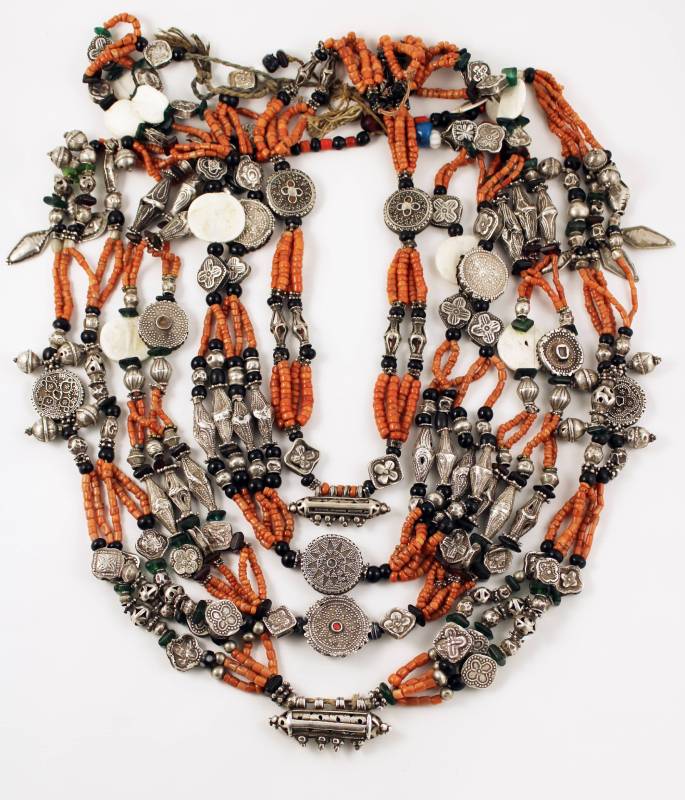
Central Asia has traditionally been a region inhabited by different nomad groups, who wandered the mountains and valleys with their herds. They crossed paths and met while moving around, and that meant a rich exchange of ideas, culture and materials. Mediterranean red coral (Corallium rubrum) was one of these traveling substances. It has played a surprisingly significant role in the material culture of  Central Asia, where, for centuries, coral arrived  despite the region being thousands of kilometres from the sea. Coral came through long-distance trade networks which carried it among a wide range of commodities from the Mediterranean basin through Persia and into the steppe and mountain societies of Inner Asia. The exchange system worked through the [...]

June 2025

Timor and SE Maluku pectoral discs, Indonesia

2025-06-11T15:49:40+02:00June 11th, 2025|Regional jewelry, types of jewelry|

There is a great variety of original and especial ornaments that can be found in Indonesia. One of the most fascinating types are these simple, yet hightly symbolic pectoral  discs, which  are named after the moon (bulan). They are found mainly in Timor and in South East Maluku, usually made of gold, silver and brass or bronze. The discs, also called "Trophy discs" were emblems given to returning warriors by local aristocrats. These pectoral ornaments symbolized prestige and bravery among men. But new mothers in Atoni were traditionally adorned in warrior costumes, including this pectoral discs, after emerging from childbirth seclusion. The significance of Indonesian pectoral discs Boat-shaped ornaments, such as [...]

March 2025

Kungrat beaded ornaments, Central Asia

2025-12-11T13:12:42+01:00March 11th, 2025|Uncategorized|

Kungrat people The Kungrat Uzbeks are descendants of Turkic tribes from the Golden Horde who settled in the southern regions of present-day Uzbekistan and neighboring Tajikistan around the 16th century. They were semi-nomadic sheepherders who maintained many of their traditions, including their distinctive clothing and headdresses, even under Soviet rule. Women from this tribe adorn themselves with beautiful beaded ornaments, that have been largely unstudied, mislabeled as Turkmen work, or misinterpreted as animal decoration. The breast ornaments and other beadwork of the Kungrat Uzbeks, are a distinct tradition within Central Asia where glass beads were not generally preferred. Unlike other nomadic groups in the region who favored silver and gold, the Kungrat Uzbeks, particularly women, extensively used [...]

Borneo heirloom beads, Indonesia

2025-03-04T19:42:48+01:00March 4th, 2025|Beads, Ethnic groups, Regional jewelry|

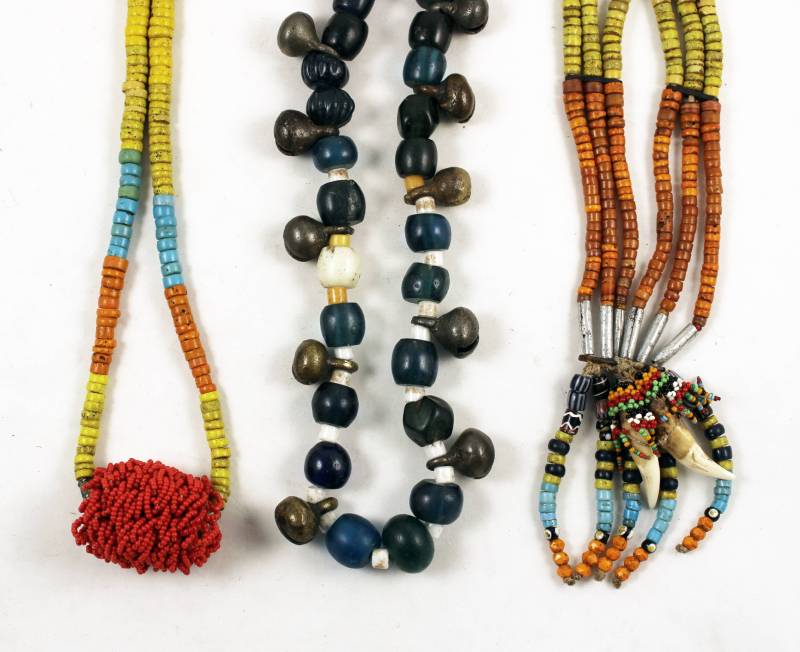
Heirloom beads from Borneo Many cultures around the world have an special bond with beads. It happened, for example, with glass beads in West Africa, when the first regular boats arrived from Europe in the 15th century. Other cultures have an specific interest in other kind of beads, like carnelian gemstone in the Middle East or turquoise in the Arabian peninsula. In Borneo, glass beads still hold significant cultural and historical importance, although most beads were and are imports, as there was never a significant local glassmaking industry. Cave dwellers in Borneo crafted beads from shell, bone, and teeth, as it has been researched from archaeological sites. But the earliest import beads around Southeast Asia originated in [...]

January 2025

Civilizations Art Fair Winter 2025

2025-03-11T15:11:37+01:00January 30th, 2025|Tribal art Fair|

From January 23rd to January 26th, 2025, I attended the Civilizations Art Fair in the Sablon area of Brussels, which is well-known for art galleries, antiquities shops, and an excellent tribal Art book shop. The exhibitors showed magnificent pieces there and I was also happy to present for the first time some high-end items of old Ethnic and tribal Jewellery, that I have been acquiring over the last few months. (see how some of the showcases looked in the pictures). Apart from the ethnic and tribal jewelry pieces, I also exhibited some African and Indonesian textiles that I have acquired recently from a collector. Ethnic jewellery on show The masterpieces of [...]

January 2024

Ottoman Empire jewellery

2024-01-31T17:30:40+01:00January 31st, 2024|Regional jewelry|

Ottoman Empire jewellery When  we hear or read about Ottoman jewelry, the term usually refers to the lavish and grandious Ottoman court jewellery, that can still be seen on display in the Topkapi Palace in Istambul. Although all kind of jewellery have stories and is interesting from my point of view, I am inclined to research about other ornament items that were made outside the court by silversmiths in diverse cities and villages along this vast empire. The information around this jewellery items is scarce, apart from some books and studies that specifically mention the influence of Ottoman tastes in local production. Ottoman jewellery history The beauty of Ottoman pieces of [...]

September 2023

Yemen jewellery

2023-10-17T12:38:36+02:00September 26th, 2023|Regional jewelry|

Yemen woman's silver jewelry Over the last few years, Yemen jewelry has been actively sought by ethnic jewellery collectors. The tradition of wearing heavy silver jewellery is dissapearing very fast, and good quality pieces are becoming difficult to find. The traditional silver jewelry made by Arab and more specifically Yemeni women indicated the place a woman occupied in society, the tribe or the village and whether or not she was married.  They were not only intended to make her beautiful: their amulet shape and the colors of the stones also granted her protection.  Moreover, this silver was a kind of investment.  It belonged to the women and was only sold by them when their daughters married, divorced, [...]

September 2022

The Miniature Paintings of Mongolian Buddhism: Burhany Zurags

2022-09-25T19:49:10+02:00September 21st, 2022|Regional jewelry|

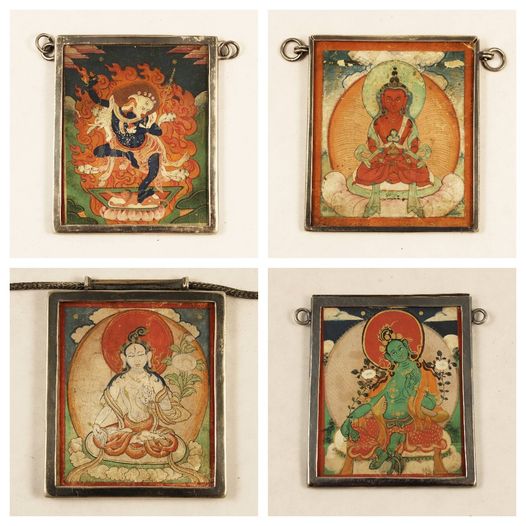
In the winter of 2006, a new sort of Mongolian paintings began to appear on the market, especially ebay. Compared to the thangkas, these were usually extremely small, as few as three centimeters in length although most were 5 to 15 centimeters on their longest side, and some were larger. The quality of the artistic craftsmanship ranged from splendid to dreadful, indicating that their original purchasers were from a wide range of economic statuses. Most of these miniature thangkas depicted deities who would be familiar to anyone well acquainted with Vajrayana Buddhist iconography, but the size of these miniature thangkas was rarely seen in the West. Once they began to appear, they arrived on eBay in significant [...]

March 2022

Men ethnic jewelry

2022-03-31T12:22:11+02:00March 31st, 2022|types of jewelry|

Men Ethnic jewelry In our occidental society we are used to women wearing jewels, but not so much about men wearing them. In any case, men's jewelry nowadays is discreet! It has not always been like this. In medieval and modern times men of higher classes wore much more ornaments than now, including pearls, gemstones or, later on, gold and silver applied to utilitarian objects, like watches and buttons. In other regions of the world men still used a number of ornaments. Some of them are worn to tell us something about the wearer: showing their power; as a way of telling other people about their ethnic origin and social group; to store wealth; to protect themselves [...]

February 2022

Indian silver women anklets

2022-02-24T17:23:50+01:00February 24th, 2022|Regional jewelry|

Old Indian anklets Foot ornaments play an important role in India, particularly in rural areas where people usually walk barefoot. Like all the other jewelry in India, anklets and paizebh (chains for the ankle) are specific for an ethnic group or province and therefore an identification mark. This is the reason why there is such a wide variety of shapes and sizes. In general, foot jewellery is made of silver or of base metals, because the body below the waistline is supposed to be impure. However, Royal and rich ladies did wear gold and gems on their foot. Why Indian woman wear anklets? Anklets are part of the dowry a woman [...]

Go to Top