About Leonor Arnó

Archaeologist (Barcelona University, 1990) and researcher, specialized in old ethnic and tribal jewelry. Owner of Ethnic Adornment, she has lectured about Ethnic Jewellery and worked as an expert for Auction houses. Leonor works as an advisor for private collections and does the research needed to catalog these collections.

December 2021

Buying genuine ethnic jewelry

2021-12-15T19:48:54+01:00December 15th, 2021|Uncategorized|

Buying genuine Ethnic jewelry Over the past years, I have often been asked about how one can tell the authenticity of old ethnographic silver jewelry. In the last couple of decades, old ethnic jewelry has become highly collectible. The progressive disappearance of ethnic traditions in the Middle East and Asia means that fewer and fewer ethnic jewelry items arrive to the markets. Some pieces are scarce and in consequence, prices rise. This is when it becomes tricky: when there is money to make, there are soon fakes available to buy. We have seen the same process happening in other areas like Modern Art, gemstones, etc. How to distinguish old ethnic jewellery? [...]
November 2021

Indian amulets

2021-12-24T09:41:49+01:00November 16th, 2021|Regional jewelry|

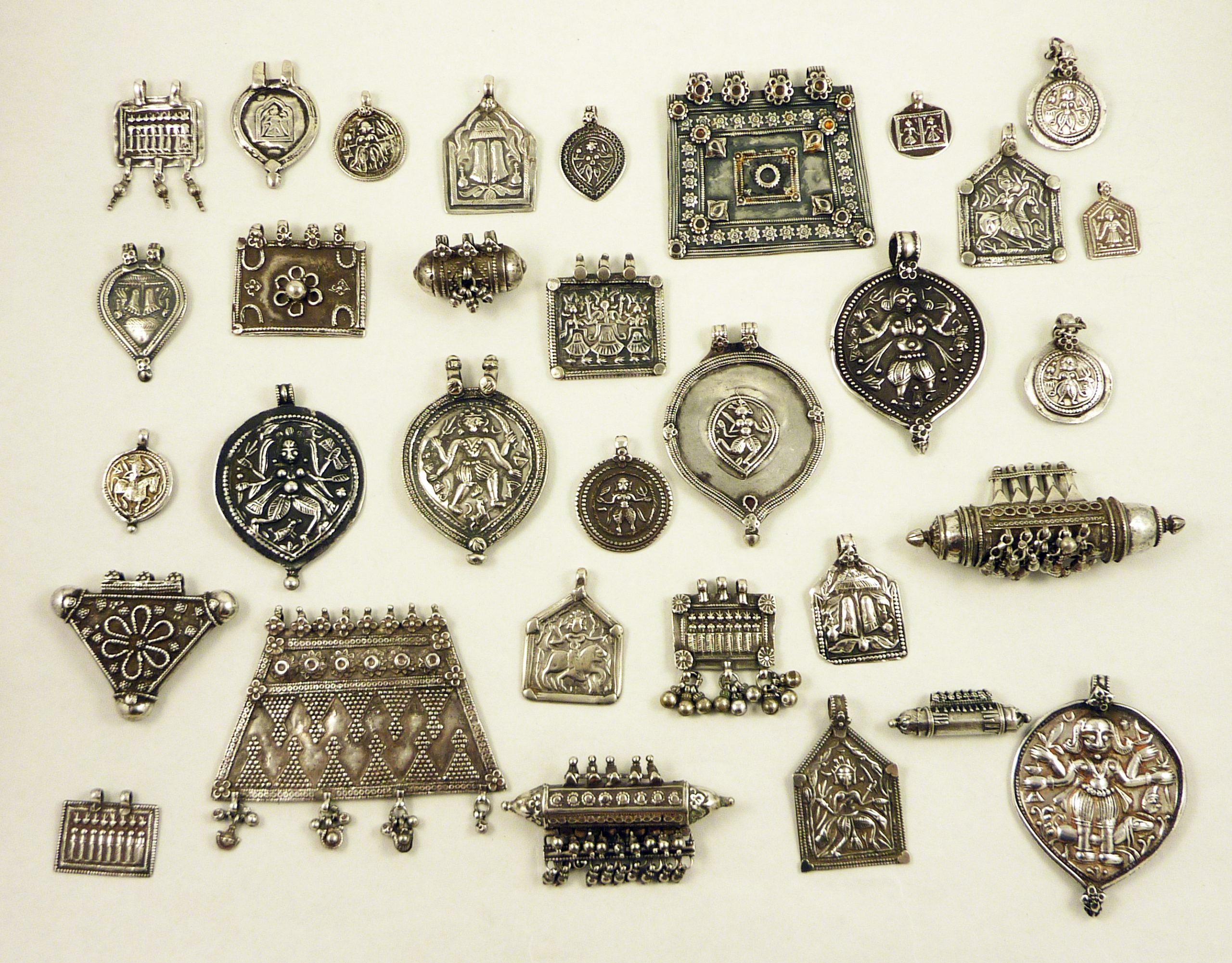
Indian amulets Amulets were worn in India already in pre-historic times. The earliest evidence appears in the Vedas which often mention the use of amulets called “mani” which means jewel. Later on, (still now) the amulets are called “kavacha” (armour). Amulets act as energy-loaded items which can effectively make the threats harmless and thereby protect the wearer. There is a wide variety of amulets in India. Formerly, and to a great extend still today, practically all body ornaments are worn for a protective purpose and are, in fact, considered to be a form of amulet. They can be worn on any part of the body, although they are usually placed close to the area that has to [...]

March 2021

CHINESE SILVER NEEDLE CASES

2021-03-10T20:02:39+01:00March 10th, 2021|Uncategorized|

Chinese silver needle cases During the Qing dynasty, a young woman’s future depended largely upon her expertise with a needle. Embroidering was one of the important features sought by men when choosing a wife. From an early age of seven or eight, a little girl practiced her sewing and needlework skills every day until she could produce the delicate stitches and complex designs. Sewing was a very important occupation for women, from all social classes, and she was taught to sew before how to write or read. Given the importance of embroidery in her life, it’s not surprising that a silver needle case, often presented to a young girl as her dowry present was central to a [...]

January 2021

Nubian bracelets

2021-01-26T22:42:21+01:00January 26th, 2021|Regional jewelry, Uncategorized|

Silver Nubian bracelets from Egypt Nubian jewelry is not so well known as other regional jewelry. It is often included and labeled as  Egyptian, which is also true, as Nubian people inhabit the regions of South Egypt and North Sudan. Jewelry plays an important part in the Nubian marriage rites and traditions, and it is an important component in a woman's dowry. Gold is a desired part of the dowry, but also silver pieces are added like the kind of bracelets shown in this post. The bracelets are massive casted silver pieces and very heavy to wear. The bands of silver are decorated with larger and smaller studs, arranged in sets of three across the surface. The [...]

December 2020

SRI LANKAN JEWELRY

2020-12-01T11:46:47+01:00December 1st, 2020|Regional jewelry|

Silver and gold from Sri Lanka Jewellery making in Sri Lanka is an ancient craft that has been in practice for centuries. Sri Lanka's jewelry history dates back some 3,000 years. Recently, archaeological discoveries were made in Sri Lankan burial grounds which can be traced back to 1000 BCE. The ancient discoveries included pieces of jewelry set with polished gemstones and beads originating from Sri Lanka. Due to its rich gem and jewelry history, centuries ago, Sri Lanka earned itself the nickname of 'Ratnadeepa' or 'Gem Island'. Some history on Sri Lanka jewelry In pre-colonial times, Sri Lankan jewelry thrived under the patronage of royalty and wealthy people. Artisans working with [...]

November 2020

TAF AMSTERDAM 2020

2020-11-17T16:11:38+01:00November 17th, 2020|Tribal art Fair|

Online TAF Amsterdam 2020 The Tribal Art Fair Amsterdam TAF 2020 was held from Thursday, October 29th  to  Sunday, November 1st. Due to the Covid-19 situation, the fair didn't take place in the Duif in Amsterdam, but exclusively as an online show, where every gallery showed their recent acquisitions on a special website built by the fair organization. The fair hold also lectures which were followed from home. It was possible to find objects from Oceania, Africa, Asia and North and  South America. The exhibition included jewellery, sculptures, textiles, masks, implements, and furniture. Ethnic Adornment recent acquisitions Ethnic Adornment offered  for the show a few items acquired during the last few [...]

October 2020

INDIAN GOLD TALI

2020-10-06T19:05:39+02:00October 5th, 2020|Regional jewelry|

Indian gold taliGold is revered in India. It is believed that 1/3 of the total amount of gold in the world is in this country. It is used in jewelry, but the reasons to own and wear a piece made of gold surpasses aesthetic purposes.  In the Subindian continent, gold is sacred and related to the divine, as touching gold is supposed to purify. For the same reason, only royalty can wear gold on the feet (anklets, toe rings), when the rest of the population wears silver.In South India, the preference for gold is spotted on every piece of jewelry. Necklaces, rings, pendants and bracelets are made of this shiny metal, and it is preferred over silver, more [...]

July 2020

SILVER LINGAM BOX, SOUTH INDIA

2020-07-29T08:32:49+02:00July 21st, 2020|Regional jewelry, Uncategorized|

Silver lingayat Lingam boxes from South India One of the most amazing pieces of jewelry from South India is the Silver Lingam box caskets, a sort of amulet-pendant used by the Lingayat Shivaite sect. The striking design, which feels very modern, is in fact a result of the need for the members of this Shiva sect to hold a Shiva lingam close to the body. Lingayats are a Hindu group who believe that Shiva is the only deity, rather than the 3 gods revered by other Hindus. They also believed that the sacred presence of Shiva was not simply confined to the temple, but that it could be held in these pendants for a personal connection to [...]

June 2020

INDIAN JEWELLERY

2020-06-03T15:46:10+02:00June 3rd, 2020|Ethnic groups, Regional jewelry|

Traditional Indian jewellery India holds a great variety of silver and gold ornaments, which characterizes, not only the different regions of this part of South Asia, but it is also a cultural and esthetic expression of the ethnic groups and influences that give shape to the country. Although it was relatively easy to find good silver jewelry just a couple of decades ago, things are changing rapidly in India. City women, who were already happier wearing gold jewelry compared to rural women, are nowadays changing silver jewellery pieces for smaller and easy to carry gold ornaments. This is also happening slowly in rural areas. Also, the workmanship that used to be excellent in building these pieces is [...]

May 2020

NEW EDITION OF THE AL THANI COLLECTION CATALOG

2020-06-04T18:32:57+02:00May 15th, 2020|books, Ethnic jewellery exhibition|

The Indian jewelery collection of the Qatari family of sovereigns has become the most important in the world In 2009 His Excellency Sheikh Hamad bin Abdullah Al Thani visited “Maharajas”, an exhibition at the Victoria & Albert Museum dedicated to the splendor of the Indian courts. In the halls of the venerable London museum, he was captivated “with the sophistication of the jewelery on display” and, although he had never visited India, he thought that he would like to possess a piece from that country. Sheikh Hamad, who was back then 27 years old, started buying jewelry that had been owned by Maharajas, Nizams, Sultans and Mughal emperors of ancient India. He did it with so many [...]

Go to Top